
The Fifth Seal: The Gateway to the Great Tribulation
In the tapestry of end-times prophecy, few moments are as heavy with significance as the opening of the Fifth Seal. While the first four seals—the iconic Four Horsemen—represent global upheaval and “birth pains,” the Fifth Seal represents a fundamental shift. It moves the focus from general human suffering to the specific, targeted persecution of those who follow God.
Understanding the Fifth Seal (Revelation 6:9–11)
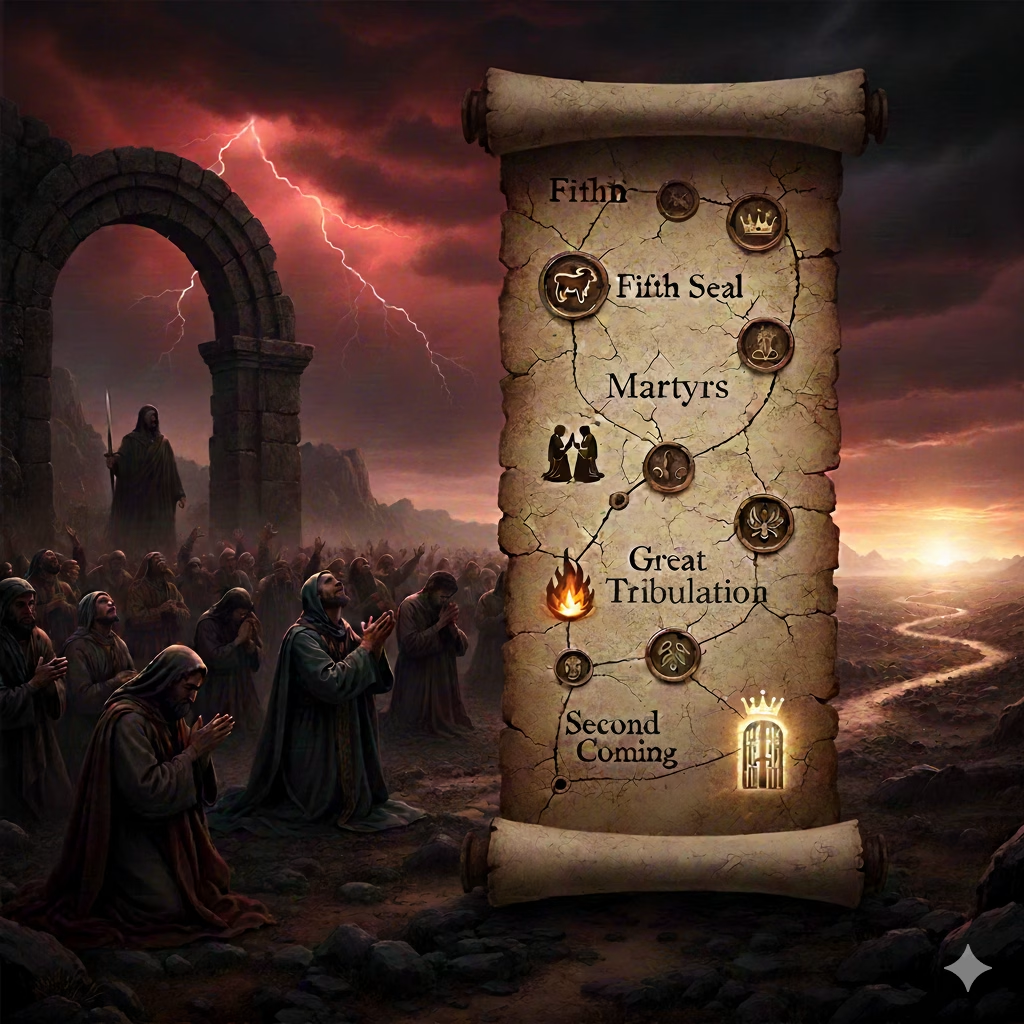
When the Lamb opens the Fifth Seal, the Apostle John is shown a sobering scene: the souls of those who have been “slain for the word of God” resting under the altar in heaven. This event is inextricably linked to the Great Tribulation for three key reasons:
- A Wave of Martyrdom: Unlike the famine or war of previous seals, this seal depicts a systematic wave of religious persecution. It mirrors Jesus’ prophecy in Matthew 24, where believers are delivered up to be killed.
- The “Little While” Longer: The martyrs are told to rest until the number of their fellow servants to be killed is “complete.” This suggests the Fifth Seal is not a single moment, but the start of a period of intense, ongoing persecution.
- A Shift in Judgment: While the first four seals are often viewed as “man’s wrath” or the natural consequences of sin, the Fifth Seal highlights the spiritual conflict that leads directly into the Sixth Seal—the beginning of “God’s wrath.”
Theological Perspectives on the Timeline
Depending on your end-times framework, the Fifth Seal takes on different nuances:
| Perspective | Interpretation |
| Pre-Tribulation | Martyrs are those who become Christians after the Rapture and are killed by the Antichrist. |
| Pre-Wrath | The Fifth Seal is the Great Tribulation (Satan’s wrath), distinct from the Day of the Lord (God’s wrath). |
| Historicist | Refers to historical persecutions of the early Church under Roman Emperors like Diocletian. |
“Birth Pains” vs. The Great Tribulation
To understand the Fifth Seal, we must distinguish it from the events that precede it. Jesus describes the first four seals in Matthew 24:8 as the “beginning of birth pains.”
Comparison: Matthew 24 and Revelation 6
Notice how perfectly the “Outline” provided by Jesus mirrors the “Detailed Illustrations” in Revelation:
| Event | Matthew 24 (The Outline) | Revelation 6 (The Seals) |
| False Christs | “Many will come in My name…” (v. 5) | 1st Seal: White Horse |
| War | “Wars and rumors of wars…” (v. 6) | 2nd Seal: Red Horse |
| Famine | “There will be famines…” (v. 7) | 3rd Seal: Black Horse |
| Death/Plague | “Pestilences…” (v. 7) | 4th Seal: Pale Horse |
| The Tribulation | “Then they will kill you…” (v. 9) | 5th Seal: Martyrs under the altar |
| Cosmic Signs | “The sun will be darkened…” (v. 29) | 6th Seal: Cosmic upheaval |
The transition occurs at the word “Then” (Greek: τότε) in Matthew 24:9. It signifies a move from general world chaos to specific “saints-focused” intensity.
The Midpoint: The Trigger of the Great Tribulation
The seven-year period (Daniel’s 70th Week) is divided into two distinct halves:
- The Tribulation (First 3.5 Years): A time of global upheaval, false peace, and “birth pains” under the Antichrist’s initial rise as a peacemaker.
- The Great Tribulation (Last 3.5 Years): Triggered by the Abomination of Desolation (Matthew 24:15), when the Antichrist declares himself God. This is where the Fifth Seal truly manifests.
The “Mark of the Beast” Connection
Revelation 13 provides the “behind-the-scenes” view of how the Fifth Seal martyrs are made. The Antichrist uses two primary tools:
- The Command to Kill: Execution for those who refuse to worship his image.
- The Economic Boycott: The “Mark of the Beast” creates a join-or-starve ultimatum.
The souls John sees under the altar are those who chose physical death over spiritual betrayal.
The Response: The Sixth Seal and the Seven Trumpets
The Sixth Seal is Heaven’s dramatic response to the cry of the martyrs. It is the “Cosmic Announcement” that the time for waiting is over.
- Cosmic Upheaval: A great earthquake, the sun turning black, and stars falling.
- The Wrath of the Lamb: For the first time, the world recognizes who is behind the judgment.
The Seven Trumpets: Divine Intervention
While the Seals primarily affected human systems, the Seven Trumpets target the physical environment and human souls with supernatural intensity.
- Trumpets 1–4: 1/3 of the land, sea, water, and sky are destroyed.
- The “Woes”: The final three trumpets target humanity directly with demonic torment (The First Woe/Locusts) and massive slaughter (The Second Woe/200M Army).
The Apostate Church: The Internal Betrayal
One of the most tragic elements of the Fifth Seal is that persecution often comes from a “counterfeit” religious system—the Great Harlot (Revelation 17).
- The Partnership: The Harlot (the Apostate Church) rides the Beast, providing moral legitimacy to his regime.
- The Blood of the Saints: John sees this system “drunk with the blood of the martyrs.”
- The Internal Threat: Jesus warned in John 16:2 that “whoever kills you will think that he offers God service.” The greatest threat often comes from religious betrayal and the “falling away” (apostasy).
The Final Victory: Restoration and Reward
The story of the Fifth Seal does not end in death; it ends in total vindication.
The Second Coming (Revelation 19)
Jesus returns not as a Lamb, but as a Warrior King on a white horse, followed by the armies of heaven (including the resurrected martyrs).
The First Resurrection and Millennial Kingdom
The martyrs are brought back to life in the First Resurrection to reign with Christ for 1,000 years. This is their reward for refusing the Mark. They move from being victims of the world’s systems to being administrators of God’s Kingdom.
The New Jerusalem
Finally, the physical universe is transformed. In the New Jerusalem, the martyrs receive their permanent home. God wipes away every tear, and as Revelation 22:4 promises: “They shall see His face.”
Anchors for the Soul: Verses for Perseverance
If you feel overwhelmed by the conflict of the end times, let these scriptures be your anchor:
- On Protection: “He who dwells in the secret place of the Most High shall abide under the shadow of the Almighty.” (Psalm 91:1)
- On Endurance: “But he who endures to the end shall be saved.” (Matthew 24:13)
- On Overcoming: “And they overcame him by the blood of the Lamb and by the word of their testimony…” (Revelation 12:11)
- On Reward: “The sufferings of this present time are not worthy to be compared with the glory which shall be revealed in us.” (Romans 8:18)
The Fifth Seal reminds us that while the “How long?” cry of the suffering is real, God’s final “It is done” is certain.
Decoding the Vision: A Glossary of Revelation Symbols
The Book of Revelation can feel like a maze of strange creatures and cosmic events. However, the Holy Spirit used symbols not to hide the truth, but to illustrate it. To understand these images, we must look at them through the lens of the whole Bible.
1. The Objects of the Throne Room
- The Altar: Represents Intercession and Sacrifice. In the Fifth Seal, the martyrs are “under the altar,” signifying that their lives were poured out as a holy sacrifice to God.
- Incense: Represents the Prayers of the Saints. When the smoke of incense rises in the Seventh Seal, it shows that the “How long?” cry of the martyrs has reached the ears of God.
- The Seven Spirits: Refers to the Holy Spirit in His fullness and perfection, specifically His sevenfold attributes (wisdom, understanding, counsel, might, knowledge, etc.).
2. Figures of Power and Authority
- Horns: Represents Political or Military Power. A beast with ten horns refers to a confederation of ten kings or world powers aligned with the Antichrist.
- Stars: In a spiritual context, stars often represent Angels or the spiritual messengers of the churches.
- Crowns: Represents Victory or Sovereignty. Jesus wears “many crowns” (diadems), showing He is the King over all other kings.
3. The Language of the People
- The Sea: Often represents the Unbelieving Nations or the chaotic masses of humanity. When the Bible says there is “no more sea” in the New Earth, it means there is no more rebellion or chaos among the nations.
- White Robes: Represents Purity and Justification. These are given to the martyrs to show they have been made righteous and victorious through the blood of Christ.
- Palms (Branches): A symbol of Joy and Triumph. Carrying palms signifies a celebration of God’s deliverance, much like Jesus’ entry into Jerusalem.
4. Places and Environments
- The Abyss (The Bottomless Pit): A Spiritual Prison for fallen angels and demonic entities. It is the source of the demonic “locusts” and the temporary holding cell for Satan during the Millennium.
- Lampstands: Represents the Churches. A lampstand doesn’t create light; it holds it. This signifies the Church’s role in holding up the light of Christ in a dark world.
- The Euphrates River: Historically the boundary between Israel and the invading empires of the East. In prophecy, it represents a Barrier that is removed to allow the final gathering for Armageddon.
Frequently Asked Questions: The Antichrist & The False Prophet
As we study the Great Tribulation, it is common to get the various “players” confused. Here are the answers to the most frequent questions regarding the leaders of the end-time rebellion.
1. Is the Antichrist a person or a system?
While the Antichrist represents a global political system (the “Beast”), the Bible describes him as a specific individual. He is referred to as the “Man of Sin” and the “Son of Perdition” (2 Thessalonians 2:3). He will be a charismatic political leader who rises to power through diplomacy before revealing his true, tyrannical nature.
2. What is the difference between the Antichrist and the False Prophet?
Think of them as the “President” and the “Propagandist.”
- The Antichrist (The First Beast): Focuses on political, military, and economic power. He demands to be worshipped as God.
- The False Prophet (The Second Beast): Focuses on religious and psychological deception. He performs miracles (like calling fire from heaven) to convince the world to worship the Antichrist.
3. Why is the False Prophet described as having “horns like a lamb”?
In Revelation 13:11, this description is vital. It means he will look and sound religious—perhaps even “Christian” in appearance. He mimics the Lamb (Jesus) to deceive people, but his message (“he spoke like a dragon”) comes directly from Satan. He is the ultimate “wolf in sheep’s clothing.”
4. Does the Antichrist know he is the Antichrist?
The Bible indicates he is fully aware of his source of power. Revelation 13:2 says the Dragon (Satan) gives this man “his power, his throne, and great authority.” His actions—entering the Temple and declaring himself God—are deliberate acts of rebellion against the Creator.
5. Can a true believer accidentally take the Mark of the Beast?
Based on the text, the answer is no. Taking the Mark is not a clerical error; it is a conscious act of worship and loyalty. Revelation 14:9–11 links the Mark directly to worshipping the Beast and his image. It is an ultimatum that forces a choice between the world’s economy and the Word of God.
6. What happens to the Antichrist and the False Prophet at the end?
Unlike the other enemies of God who wait for the final judgment, these two are dealt with immediately upon Jesus’ return. Revelation 19:20 tells us they are captured at the Battle of Armageddon and cast alive into the Lake of Fire.
Summary of the “Unholy Trinity”
To keep it simple for your study, remember that Satan always tries to counterfeit God:
- The Dragon (Satan) — The counterfeit of the Father.
- The Beast (Antichrist) — The counterfeit of the Son.
- The False Prophet — The counterfeit of the Holy Spirit.
In closing
Revelation is the only book in the Bible that comes with a promised blessing for those who read it. By tracing the journey from the Fifth Seal to the New Jerusalem, we see a God who is in total control of history. The martyrs are not lost; they are simply waiting for the moment when justice and mercy finally meet at the return of Christ.
Deepen your study!
If this breakdown helped you see the timeline of Revelation more clearly, please share this post with a friend or your small group.
Discover more from Discernment Watch
Subscribe to get the latest posts sent to your email.