
Introduction: The Ecclesiological Shift
This post provides a critical evaluation of the ecclesiology (doctrine of the church) of Charles Peter Wagner, the central figure credited with founding the New Apostolic Reformation (NAR). Wagner’s model advocates for a radical shift in church governance, asserting that the modern-day church must be ruled by a restored hierarchy of apostles and prophets to achieve societal “dominion.”
Part I: The Core Theological and Exegetical Flaws
1. The Misinterpreted “Fivefold Ministry”
Wagner’s entire governmental structure rests on his interpretation of Ephesians 4:11 (apostles, prophets, evangelists, pastors, teachers), which he views as the divinely ordained government of the church. Critics offer a profoundly different view:
- Service (Domata) vs. Governance: Critics argue that the Greek term used is domata (gifts), not offices of rank or rule. These roles are for empowerment and service, not for governance.
- Equipping (Katartismos) vs. Ruling: The biblical purpose is katartismos—equipping, mending, or repairing the saints (the laity) to do the work of the ministry themselves. The focus is on making the community self-developing, not dependent on a ruling elite.
- Historical Context: The Epistle to the Ephesians was written to a “settled” community that already had a governance structure of elders (Acts 20). The mention of apostles and prophets in this context refers to functionaries who strengthen the body’s unity, not new governmental rulers.
While Wagner correctly identified the need for a dynamic, mission-oriented church, his prescription of an apostolic hierarchy is exegetically flawed. The fivefold ministries should be viewed as servants equipping a democratic, Spirit-filled community rather than a governing elite.
2. The Phenomenological Risk: Subjectivism over Scripture
Wagner is criticized for prioritizing the observation of current spiritual experiences (“what God is actually doing”) over rigorous textual exegesis. This phenomenological approach carries several dangers:
- Opens the Door to Subjectivism: Interpreting God’s will through personal experience and current events makes the theology fluid, allowing for “progressive revelation” where new experiences can supersede established biblical truths.
- Exegetical Neglect: It leads to creating a theology based on results, not the text, often resulting in proof-texting—collecting disparate verses without proper exposition to fit a modern, pre-existing observation.
- Pragmatism over Truth: The methodology shifts the measure of legitimacy from scriptural fidelity to perceived success or supernatural manifestation, fostering a pragmatic “means justify the ends” theology.
Part II: The Leadership Model: CEO vs. Servant-Manager
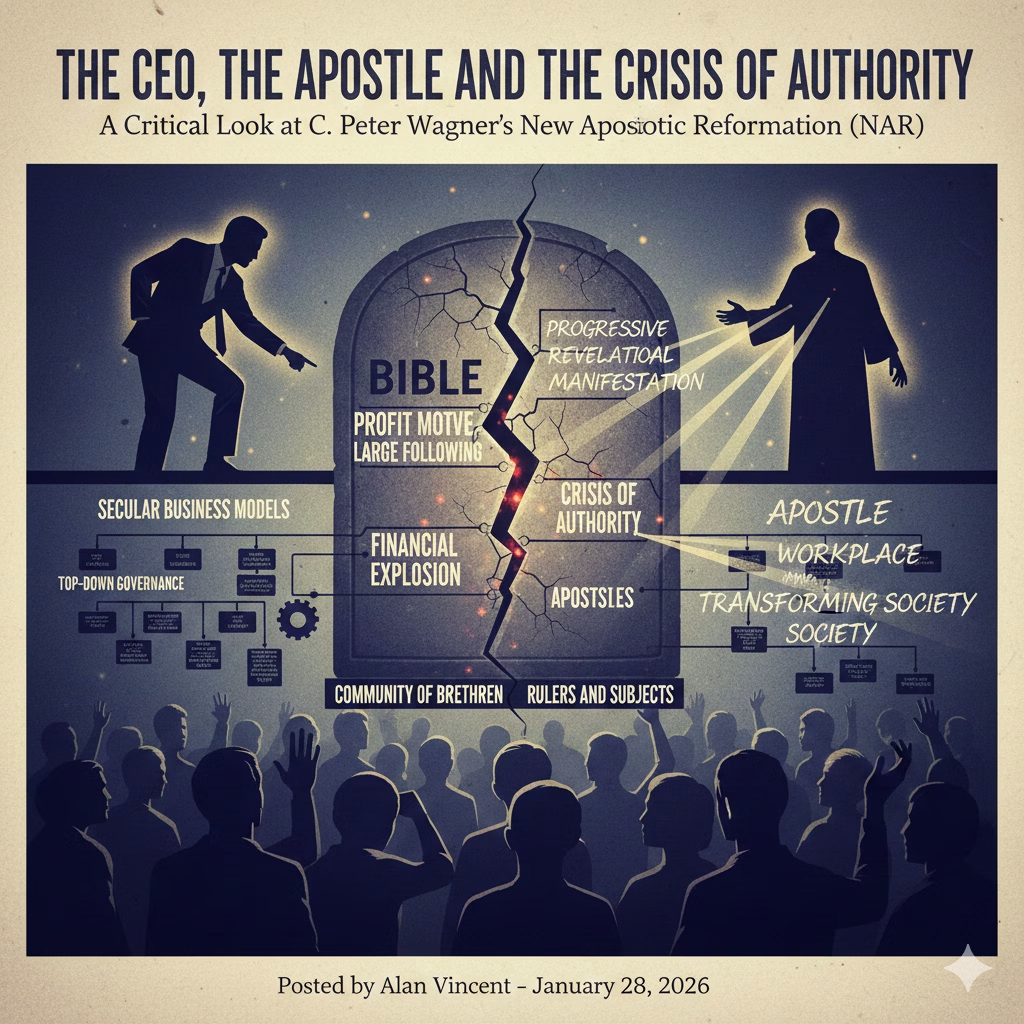
Wagner’s ecclesiology is explicitly derived from secular business principles, which stand in stark contrast to the biblical concept of servant leadership.
| Feature | Wagner’s Business Model (CEO) | Biblical Servant Leadership (Steward) |
| Leader’s Role | Chief Operating Officer (COO) / Business Owner who casts a top-down vision. | Servant-Manager / Steward who exercises delegated authority (exousia) for service. |
| Governing Authority | Shifts authority from groups (elders/boards) to the individual leader; governance structures are rejected as “bureaucracy.” | Rooted in organic mutuality and the joint exercise of authority, often involving elders. |
| Success/Motivation | Driven by a “profit motive,” defined as securing a “large following and financial explosion.” | Focused on community empowerment and spiritual maturity (katartismos). |
| Power Structure | Creates “social stratification” that divides the church into “rulers and subjects.” | Promotes a “flat structured community” (collegium) where the priesthood of all believers is realized. |
Risks of the CEO Leadership Style:
- Abusive Power Dynamics: The shift of trust to a single individual generates “illegitimate influence” and risks the “modern abuse of ecclesiastical powers,” where congregants may “subject themselves to victimization.”
- Lack of Accountability: By removing traditional governance structures (deacon boards, presbyteries), the model dismantles checks and balances, requiring the leader to be “trusted unreservedly.”
- Stifling Laity: The top-down vision hinders the realization of the “priesthood of all believers,” creating a passive laity by centralizing the church’s “vital energy” and ministry in the leader.
Part III: The NAR’s Dominion Mandate
The Nuclear Church vs. The Extended Church
Wagner expands the definition of the church (ekklesia) beyond the religious institution by differentiating between two entities:
- Nuclear Church: Refers to the people of God when they are gathered in their congregations (typically on Sunday).
- Extended Church: Refers to the same people of God when they are scattered in the workplace and community (Monday through Saturday).
The Extended Church is mandated to take “dominion” over secular spheres, targeting sectors such as government, business, arts and entertainment, and media. This mission is led by “workplace apostles” who operate under a “different rule book” than traditional congregational leaders and are considered “most effective in transforming society.”
Conclusion and Final Critique
Ultimately, the most negative critique against Wagner’s theology is that he constructs an illegitimate, authoritarian hierarchy based on flawed biblical interpretation and secular business models, fundamentally distorting the church from a “community of brethren” into a stratified system of “rulers and subjects.”
Discover more from Discernment Watch
Subscribe to get the latest posts sent to your email.