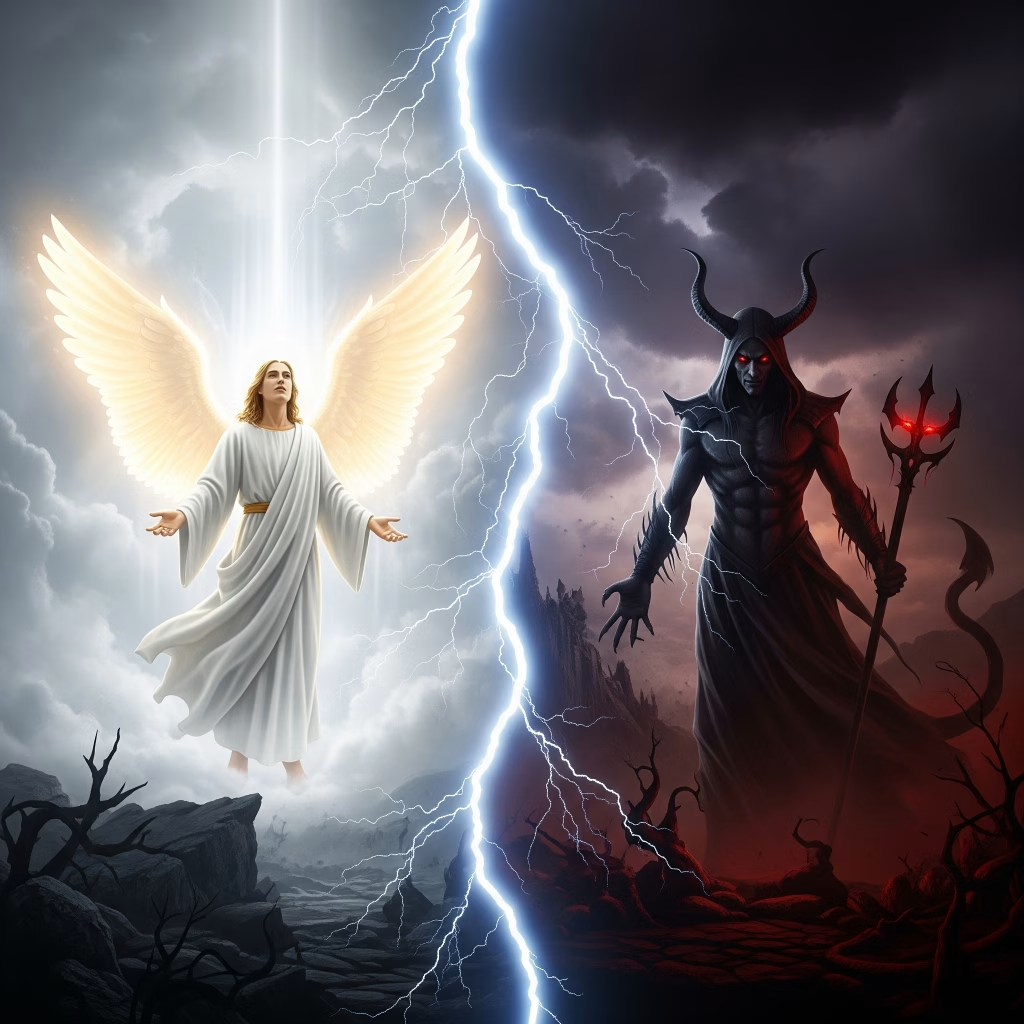

Luciferianism may present itself as a path to enlightenment and personal growth, but its core tenets stand in stark contrast to the foundational truths of Christianity. In this post, we explore the key beliefs of Luciferianism and why they are incompatible with the Christian faith.
Understanding Luciferianism and Its Challenges to Christianity
Luciferianism is more than just a misunderstood offshoot of Satanism. It’s a philosophical and spiritual worldview that exalts Lucifer—not necessarily as a being to be worshiped, but as a symbol of enlightenment, rebellion, and self-empowerment. For many who follow it, Lucifer represents knowledge, independence, and personal transformation.
While it may appear appealing to those seeking spiritual autonomy, the core teachings of Luciferianism are fundamentally at odds with the doctrines of biblical Christianity. Let’s examine these doctrines and explore where the clash becomes unmistakable.
What Luciferians Believe
1. Lucifer as the “Light-Bringer”
In Luciferian thought, Lucifer is seen as a figure who brings light and knowledge to humanity—much like Prometheus in Greek mythology. He symbolizes breaking free from ignorance and traditional constraints.
2. Rebellion Against Authority
Luciferians often reject the authority of religious institutions and fixed doctrines. They emphasize personal freedom over submission to any divine law or scriptural truth.
3. Self-Deification and Individualism
One of the movement’s more provocative ideas is that each person can become their own “god,” fully actualized and self-determined. Human potential is elevated as the highest pursuit.
4. Moral Relativism
Luciferian ethics are typically based on the idea that morality is subjective. Right and wrong are determined by personal perspective rather than divine standards.
5. Occult and Esoteric Practices
Some strands of Luciferianism include rituals, magic, and other occult practices as tools for personal growth or enlightenment.
Core Teachings of Christianity
God as Creator and Sovereign
Christianity teaches that God is the holy, personal Creator of the universe. He alone holds ultimate authority and wisdom.
1. Scripture as the Final Authority
The Bible is viewed as the inspired Word of God—our ultimate guide in matters of faith, morality, and salvation.
2. Jesus Christ as Savior and Lord
The Christian faith centers on Jesus, the Son of God, who provides the only path to salvation through His life, death, and resurrection.
3. Objective Moral Truth
Christianity teaches that right and wrong are not up for debate—they are grounded in God’s unchanging character and revealed in His Word.
4. Worship Rooted in Truth
True worship is directed toward God alone, not through mystical or occult practices, but in spirit and in truth, as guided by scripture.
Where the Doctrines Collide
🔻 Lucifer vs. the God of the Bible
To venerate Lucifer—even symbolically—is to oppose the biblical understanding of God’s exclusive sovereignty. Lucifer, in Christian theology, is the very embodiment of rebellion against God.
🔻 Self-Rule vs. Scriptural Authority
Luciferianism’s emphasis on autonomy is a direct contradiction to Christianity’s call to submit to God’s Word and His lordship.
🔻 Becoming “God” vs. Knowing God
Christianity teaches that we are not divine—we are created in God’s image and called into relationship with Him, not to replace Him.
🔻 Relativism vs. Divine Standards
In a world where “everyone does what is right in their own eyes,” Christianity still upholds objective truth rooted in God’s character.
🔻 Occultism vs. Biblical Worship
Practices rooted in mysticism, magic, or esoteric knowledge are consistently condemned in Scripture and cannot coexist with Christian worship.
A History of Conflict and Confusion
Luciferian ideas have surfaced throughout history under various names and philosophies. Often linked with esotericism and occultism, they have always stood in opposition to Christian theology. The romanticizing of Lucifer as a misunderstood liberator continues to deceive many—both outside and inside religious circles.
Conclusion: Two Irreconcilable Paths
Luciferian doctrine and Christianity do not simply differ—they are fundamentally opposed. Where one calls for self-rule, the other calls for surrender to Christ. Where one promotes hidden knowledge, the other offers revealed truth. As Christians, it is vital to recognize these differences, reject deceptive alternatives, and stand firm in the truth of God’s Word.
Discover more from Discernment Watch
Subscribe to get the latest posts sent to your email.